GIZUMO JAPANESE OCCULT · FOLKLORE & PERFORMANCE
Tsuchigumo: A Theatre of Entanglement
Flying threads, theatrical costume, and the troubling history of a name shape the noh drama Tsuchigumo.
Existing subject: Yōkai · Narrative: folklore · Spoilers: plot-spoilers
Content note: Illness, supernatural attack, pursuit, and a monster’s death; discussion of a historical derogatory label.
The Japanese noh Tsuchigumo, its performance materials, and a careful distinction between its monster and historical communities labelled with the same word.
The sickroom becomes unsafe
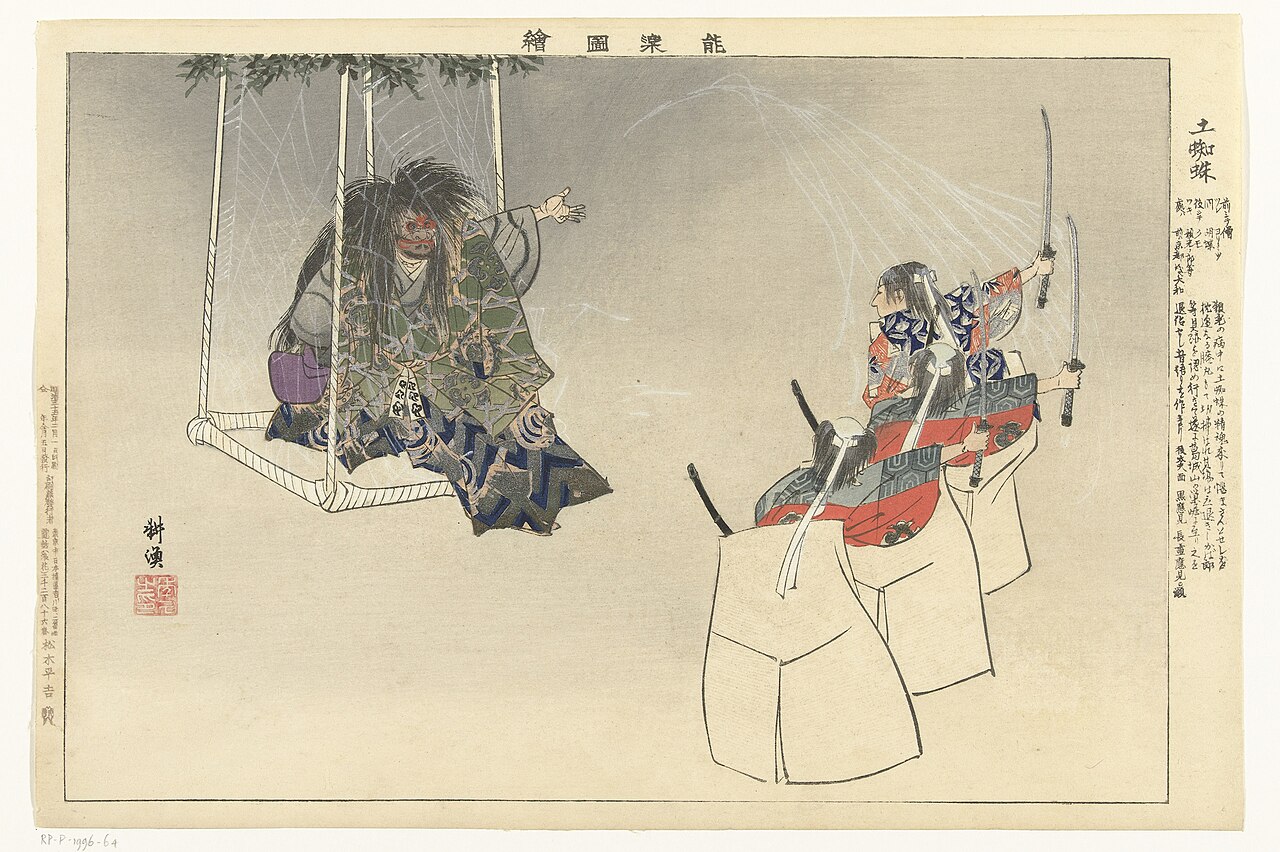
The opening of Tsuchigumo places the warrior Minamoto no Raikō in bed, already vulnerable through illness. A suspicious monk appears and casts spider threads at him. Raikō strikes back; a pursuing warrior follows the blood trail to the creature's old mound. These are events within the noh drama, as outlined by the Nohgaku Performers' Association, rather than testimony about a real animal or supernatural attack. [TG1]
In my reading, the sickroom supplies a particular anxiety: even the place where a powerful person withdraws for care cannot guarantee safety. The visitor makes proximity dangerous. A spectator can follow that reversal without knowing every warrior legend behind it. What looked like an encounter beside a bed becomes a contest over whether the threatened body can act. [TG1]
A threat made visible in air
Japan Arts Council describes the battle through repeated throws of white spider threads. Its account connects an improvement in the thread effect with the Meiji period, a reminder that inherited theatre can incorporate comparatively recent technical developments. The spectacle is made by people using materials; its effectiveness does not depend on concealing that fact from the audience. [TG2]
One way to watch is to consider how a thrown thread temporarily redraws the stage. An open interval becomes a line connecting attacker and target. In my interpretation, entanglement is made legible before it needs to be imagined as bodily injury. The spread of the material lets danger occupy visible space, giving an otherwise elusive hostile presence something the eye can follow. [TG2]
Costume carries force
Tokyo National Museum's exhibition on the play explains how broad-sleeved happi jackets and deeply pleated hangiri trousers help costume powerful supernatural roles. It contrasts those materials and emphatic patterns with the elegant, lightweight chōken associated with the ailing Raikō. Costume therefore contributes to the relationship between figures, rather than merely decorating a story already complete in words. [TG3]
A contemporary reading can begin with that imbalance of appearances. The vulnerable warrior and the imposing creature need not occupy the stage in the same visual register. Fabric can suggest pressure, breadth, or delicacy. This is an interpretive invitation to notice how a performance distributes force, not a claim that every production produces an identical response. [TG3]
The name requires care
The museum also identifies tsuchigumo as a historical derogatory designation for local people who did not submit to the Yamato court. That usage must be distinguished from the spider spirit represented in noh. Historical communities were people, not monsters; repeating a hostile label without explaining its perspective risks carrying its dehumanization into the present. [TG3]
Japan Arts Council presents the link between the monster and defeated communities as a possible interpretation. That qualification is important. We can examine how a tale organizes heroism and hostility without claiming one certain historical identity for its creature. For me, the productive tension is to appreciate the theatrical invention while remaining alert to the political work that naming can perform. [TG2]
Sources and original texts
Original cultural readings of folklore, fiction and artistic representations. Interpretations are distinguished from source descriptions. Access to a collection record does not grant permission to reproduce its images or text. No supernatural event is verified.
- Tsuchigumo / Tsuchigumo (alternate spelling) — The Nohgaku Performers’ Association. Checked 2026-10-15.
- Tsuchigumo (The Ground Spider) — Invitation to Nohgaku — Japan Arts Council. Checked 2026-10-15.
- Noh and Kabuki: Masks and Costumes Seen in the Noh Tsuchigumo — Tokyo National Museum. Checked 2026-10-15.
Original English cultural analysis. Institutional source descriptions are paraphrased, and interpretive conclusions are identified as readings. No source prose is reproduced. One image (Tsukioka Kōgyo's Noh illustration of Tsuchigumo) is reproduced from Wikimedia Commons in the public domain and credited with the image.