GIZUMO JAPANESE OCCULT · FOLKLORE & PERFORMANCE
Kamaitachi: Explaining an Unseen Cut
Regional accounts connect unexplained wounds to weasels, deities, calendars, and a swordsmith’s secret, while modern research questions a scientific-sounding explanation.
Existing subject: Yōkai · Narrative: folklore · Spoilers: premise-only
Content note: Non-graphic discussion of wounds and historical healing beliefs; these beliefs are not medical advice.
Recorded Japanese kamaitachi traditions in Niigata, Gifu, and Aichi, alongside modern folklore scholarship.
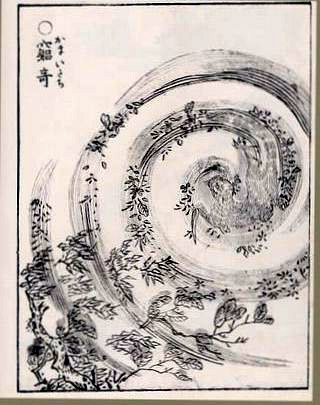
An injury looking for an explanation
Kamaitachi is compelling because the injury can be more definite than the being blamed for it. A Nichibun database summary of Niigata Prefecture’s 1982 history describes a sickle-shaped wound said to cause surprisingly little pain or bleeding. It records several explanations: a weasel’s action, or a person intruding where a deity is playing with a drawn sword. These are reported interpretations of injury, not verified accounts of supernatural causes. [KA1]
The alternatives change the imagined relationship between person and place. One gives the wound an animal agent; another makes it an unintended crossing of a divine boundary. The word can therefore organize an experience before it provides a consistent picture of its cause. Treating every account as a sighting of the same small animal would hide that uncertainty. [KA1]
The calendar and three deities
A Gifu tradition, summarized from a 1971 report by Tōyō University’s folklore research society, names three deities. One makes a person fall, another cuts, and the last is associated with healing. The account also links injury to stepping over a calendar and records a treatment involving that same object. These are historical beliefs, not a treatment to copy. [KA2]
Calling the three participants simply monsters would replace the record’s religious language with a different category. In this version, the calendar is more than an expendable household sheet: conduct toward it has consequences. The story turns a puzzling bodily event into a relationship between everyday behaviour, respect, injury, and repair. [KA2]
A secret incompletely taught
An Aichi account takes another route. Nichibun summarizes Hayakawa Kōtarō’s 1916 “Itachi no hanashi”: kamaitachi had belonged to a swordsmith’s secret knowledge, but the smith died after transmitting the secret without teaching how to contain it. The resulting danger is explained through an unfinished apprenticeship. [KA3]
Read as a story about knowledge, this version asks what happens when a technique outlives the person who understood its limits. Its anxiety is social as well as bodily. Teaching is incomplete if it passes on an effect while withholding the means to limit it, a tension recognizable even outside the supernatural framework of this particular account. The missing instruction gives an apparently random threat a history of human responsibility, rather than merely adding another weapon to a creature’s profile. [KA3]
When explanation sounds scientific
Folklorist Yoshiyuki Iikura’s university research record describes his study of a later claim: that a whirlwind creates a vacuum which tears the skin. He identifies this as a pseudoscientific explanation and examines how it spread as modern folk knowledge. Scientific-sounding language can itself become part of a tradition. [KA4]
That finding offers a useful way to read the older accounts too. An explanation’s vividness, familiarity, or confident delivery does not establish its accuracy. Kamaitachi’s cultural history is partly a history of persuasive answers to an unsettling question: how did this happen? Preserving those answers as folklore allows us to study their imagination without converting them into a diagnosis. [KA4]
Sources and original texts
Original cultural readings of folklore, fiction and artistic representations. Interpretations are distinguished from source descriptions. Access to a collection record does not grant permission to reproduce its images or text. No supernatural event is verified.
- カマイタチ,鎌鼬,イタチ,神様, record C1510068-000 — International Research Center for Japanese Studies (Nichibun). Checked 2026-10-15.
- カマイタチ, record 1460437 — International Research Center for Japanese Studies (Nichibun). Checked 2026-10-15.
- 鎌鼬,刀鍛冶, record 0640235_001 — International Research Center for Japanese Studies (Nichibun). Checked 2026-10-15.
- 飯倉 義之: research publications, 鎌鼬存疑―「カマイタチ現象」真空説の受容と展開― — Kokugakuin University, K-ReaD. Checked 2026-10-15.
Original English cultural analysis. Institutional source descriptions are paraphrased, and interpretive conclusions are identified as readings. No source prose is reproduced. One image (Toriyama Sekien's kamaitachi) is reproduced from Wikimedia Commons in the public domain and credited with the image.