GIZUMO JAPANESE OCCULT · FOLKLORE & PERFORMANCE
Baku: Giving a Nightmare Something to Eat
The dream-eating baku turns fear into an appetite. Museum objects reveal how that idea moved among spoken appeals, headrests, and miniature carvings.
Existing subject: Yōkai · Narrative: folklore · Spoilers: none
Content note: Discusses nightmares and historical protective beliefs. No medical or supernatural efficacy claims.
Japanese baku imagery and protective customs as documented through museum collections, especially Edo-period personal accessories; no claim of uniform practice across Japan.
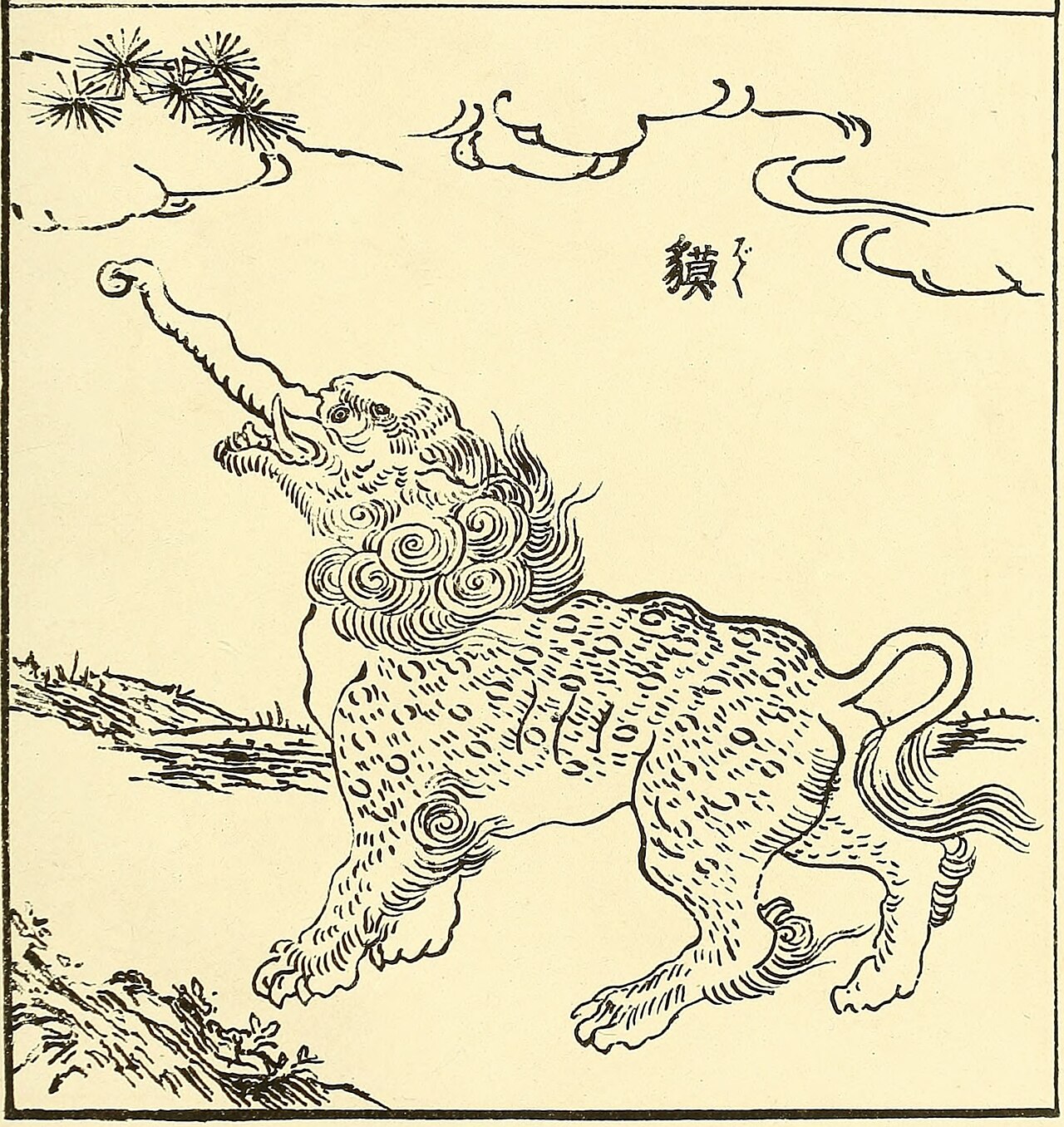
An appetite enlisted for comfort
The Tikotin Museum of Japanese Art describes a traditional appeal asking the baku to consume a bad dream, repeated three times. It also records the creature’s name inscribed on headrests and its appearance in netsuke with headrests. These accounts document a protective tradition; they do not demonstrate an intervention in sleep. What matters culturally is the particular action imagined: the frightening experience becomes something that another being can eat. [BA1]
This essay interprets that appetite as a reversal of ordinary monster logic. The feared object becomes food, and the creature’s extraordinary capacity becomes useful to the person who invokes it. Repetition gives the appeal a shape, while an inscription gives the name a durable place beside sleep. Neither act requires a picture of the original nightmare. The baku can therefore stand for relief without forcing each fear into a fixed visual form. This is a reading of the tradition’s structure, not a claim about its psychological effectiveness. [BA1]
Protection within reach
Maidstone Museum’s Japanese collection includes a round, carved and pierced ivory netsuke carrying a baku design. Its account explains how netsuke helped suspend containers and pouches from a belt, and describes baku imagery worn as an amulet against nightmares. The creature consequently belonged not only to stories but to crafted things associated with the body. The museum also notes that rich materials in such accessories could communicate an owner’s wealth and taste. [BA2]
In our reading, these uses complicate the easy division between belief and decoration. A carefully made object could be protective, pleasurable, and socially legible without requiring its owner to choose only one function. Its compact scale matters: an immense imaginative promise is condensed into something wearable. Rather than assuming that a nightmare creature must appear in a frightening picture, examine the circumstances of possession. A small carving may invite familiarity and handling even when its subject concerns experiences beyond the owner’s control. [BA2]
A body built to be recognizable
An eighteenth-century baku carving at the Los Angeles County Museum of Art, attributed to Gechū, makes a useful object-specific comparison. The museum records ivory with staining, ink, and traces of red pigment. Its description emphasizes a seated, lion-like creature with a curling mane, its head thrown back and one paw resting on a geometric cylinder. That description should not be inflated into a complete account of what every part meant to its original owner. [BA3]
Our interpretive conclusion is more modest. Posture, mane, surface treatment, and a prop give a sculptor several ways to make an impossible being materially particular. The baku does not have to swallow a visibly represented dream for its subject to become intelligible. A title, an established motif, and an object’s context can supply what the carving leaves unseen. Looking for those relationships yields a richer question than whether the monster was believed to exist: how did makers give an invisible anxiety a graspable counterpart? [BA3]
Sources and original texts
Original cultural readings of folklore, fiction and artistic representations. Interpretations are distinguished from source descriptions. Access to a collection record does not grant permission to reproduce its images or text. No supernatural event is verified.
- Fabulous Creatures: Baku — Tikotin Museum of Japanese Art. Checked 2026-10-15.
- Japanese Dreams — Maidstone Museum. Checked 2026-10-15.
- Attributed to Gechū, Baku: Monster that Eats Nightmares — Los Angeles County Museum of Art. Checked 2026-10-15.
Original English cultural analysis. Institutional source descriptions are paraphrased, and interpretive conclusions are identified as readings. No source prose is reproduced. One image (the baku as drawn in the Kinmō Zui encyclopedia) is reproduced from Wikimedia Commons in the public domain and credited with the image.