GIZUMO JAPANESE OCCULT · FOLKLORE & PERFORMANCE
Shuten Dōji: Why the Banquet Comes Before the Battle
A convivial scene can conceal the decisive trap in the Shuten Dōji story.
Existing subject: Yōkai · Narrative: folklore · Spoilers: plot-spoilers
Content note: Abduction, intoxication and the killing of a fictional oni are discussed without graphic description.
Folklore and fiction; no supernatural verification.
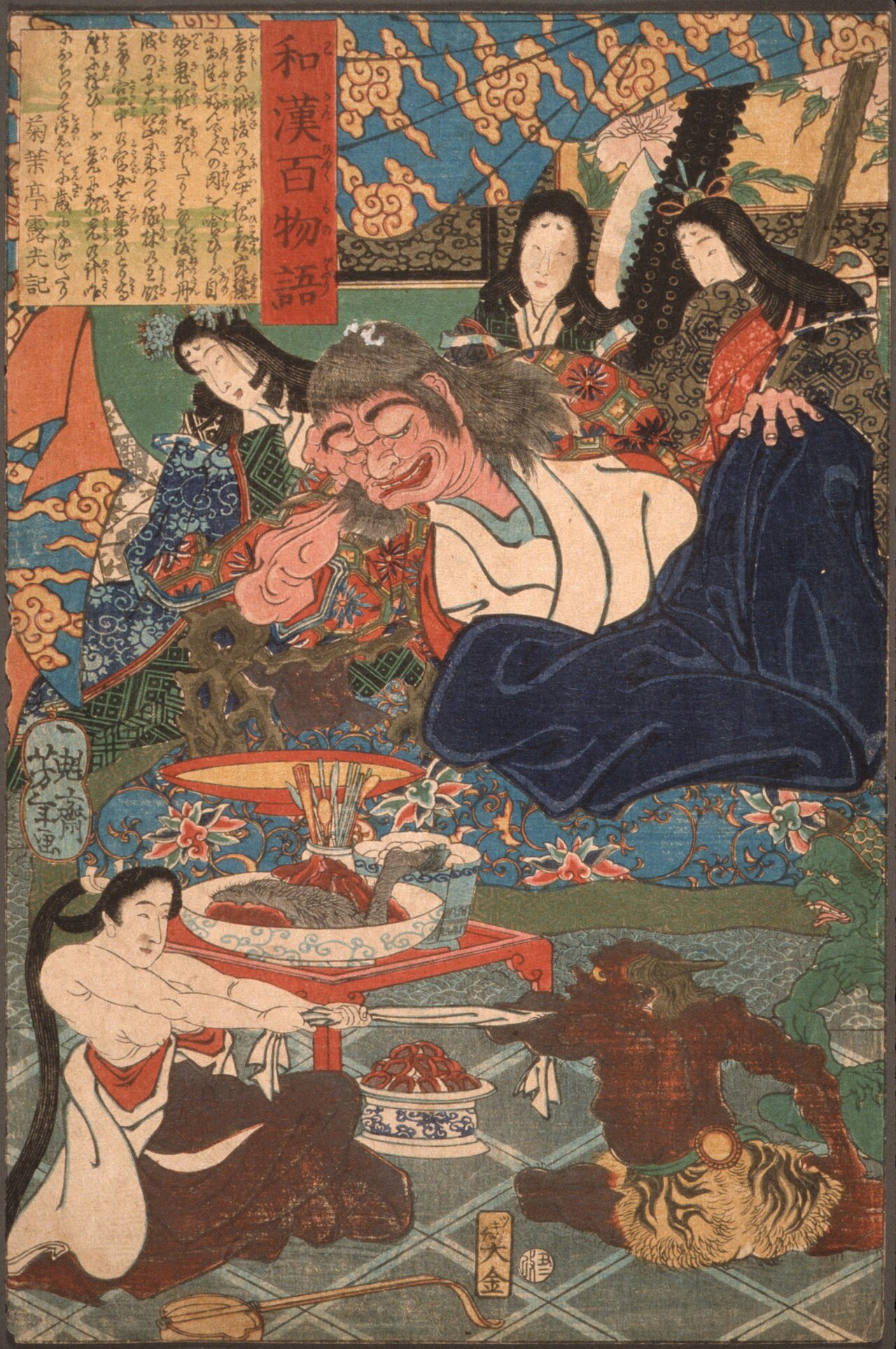
A rescue story can contain a party
Shuten Dōji pictures need not show combat to depict a dangerous encounter. Hyogo Prefectural Museum of History introduces the tale as one of the short narratives called otogizōshi: the warrior Minamoto no Raikō and his companions defeat an oni and rescue the capital from danger. The museum also traces the subject through illustrated printed books, screens and handscrolls. That combination matters when you meet an apparently sociable scene under this title. Its atmosphere belongs within an adventure about entering an enemy’s world. A pleasant-looking gathering need not represent a pause in the conflict; it may be the way that conflict advances. [SD1]
Hospitality is part of the plan
Fujita Museum’s discussion of its Moronobu scroll explains the deception. The warriors arrive disguised as mountain ascetics and request shelter, claiming to have lost their way. Entertainment and drinking then help them overcome the oni. The story’s divinely supplied sake weakens its supernatural drinkers while strengthening the humans. This is a fictional device, not a claim about alcohol. The museum also notices an oni fussing with its hair, a small gesture absent from the accompanying text. Read such sociability alongside the trap: the company can appear recognizably human while remaining vulnerable to the visitors’ strategy. Knowing what follows changes the banquet from simple merriment into an uneasy scene. [SD2]
An origin story changes what precedes the feast
The version still matters. Suntory Museum’s exhibition distinguishes stories locating Shuten Dōji at Mount Ōe from those placing him at Mount Ibuki. Its Kanō Motonobu scroll belongs to the Ibuki tradition. The museum further identifies scrolls that preserve substantially similar events but add an account of the oni’s early life. Such additions invite a different question before the confrontation: how did this antagonist become an oni? They do not automatically supply the backstory to every painting bearing the title. When comparing two works, check whether the museum identifies an origin narrative in each; resist carrying an explanation from one version into another just because the banquet looks familiar. [SD3]
Locate the scene within its own sequence
Tokyo National Museum describes a set of thirty-six fan-shaped paintings extending from the story’s beginning through the defeat and victorious return. Originally attached to screens, the paintings show no fan-fold marks; the museum identifies them as pictures made for viewing. Their extended sequence offers a useful comparison with an isolated episode. Locate what the characters have already done, then ask what danger remains beyond the chosen moment. A single banquet image cannot tell you how much of the surrounding story its original viewer was shown. Check the catalogue’s description of the work before treating one reproduced scene as the whole visual narrative. [SD4]
For your own viewing notes, separate three questions: what looks welcoming, what knowledge makes it threatening, and which identified version supports that knowledge. This keeps the pleasure of the scene and the mechanics of its deception in view together.
Official sources
Original cultural interpretation of folklore, fiction and artistic representations. Source access does not grant image or text republication rights. No supernatural event is verified.
- 屏風と絵巻で見る酒呑童子 — Hyogo History Museum. Checked 2026-10-15.
- 酒は飲んでも飲まれるな — Fujita Museum. Checked 2026-10-15.
- 酒呑童子ビギンズ — Suntory Museum. Checked 2026-10-15.
- 酒呑童子 — Tokyo National Museum. Checked 2026-10-15.